false-positive field guide
Real Photos That Look AI-Generated
Explore real photos and videos that appear artificial, and learn why unusual lighting, perspective, compression, and timing can fool us.
Spotting AI is not only about finding synthetic media. It is equally important to avoid rejecting a real image because it looks too strange, polished, or improbable.
These examples are real. They show how perspective, timing, weather, architecture, compression, and ordinary camera processing can create the same cues people associate with AI.
Inspection checklist
Do not judge on vibes alone
An image can feel uncanny because the scene is rare or the composition is unusually clean. Treat that feeling as a prompt to investigate, not a verdict.
Account for camera processing
HDR, sharpening, denoising, portrait modes, and heavy compression can flatten texture or create halos that resemble generation artifacts.
Test the perspective
Long lenses, wide angles, reflections, and forced perspective can produce proportions that look impossible while remaining optically valid.
Look for provenance
A traceable photographer, earlier upload, alternate angle, or credible publication is stronger evidence than any single visual tell.
from the game
Annotated examples
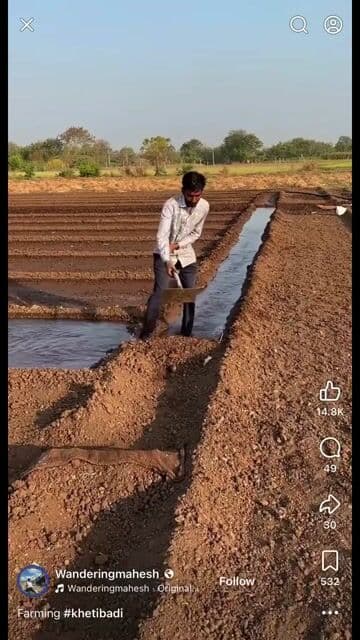
I don't think this is AI, but everyone says it is
Real. A farmer (@Wanderingmahesh) opens irrigation channels with a hoe and water floods down each furrow. Small things stay consistent for all 23 seconds: a scrap of paper in the soil behaves like paper, and bits of straw carried by the water stay intact. AI video tends to morph or drop small objects within a few frames. At the end the cameraman's shadow falls across the field. The comments were sure it was AI, and they were wrong.
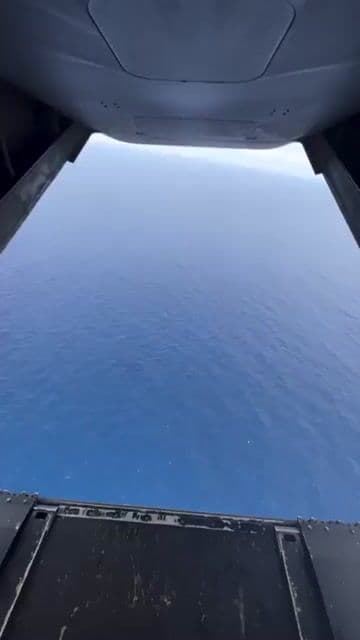
Wife thinks this is AI — rock trajectory discrepancy
Real. The rock hits the sea closer to the plane than you'd expect because it keeps the plane's forward speed as it falls. It isn't left behind; it travels along underneath. The 19-second clip is one continuous shot: the seat, cables and scratched ramp stay identical as the camera swings around, and the video predates AI video tools. "The physics looks wrong" sometimes just means the physics is counter-intuitive.
Photo I took yesterday — cypress path to a chapel
Real, posted as a reply to an AI "dream architecture" image to show that real places can look like this too. It has the look of a phone photo: over-sharpened cypress needles, a person with a red backpack walking away, another figure further up the path, and a pile of dug-up dirt in the corner that nobody would put in a prompt.
A Cambridge Diary — daily photo, Friday 15th May 2026
Real. It's from @acambridgediary, who has posted a photo of Cambridge every day for over 10,000 days. The teal sky and towering cloud look generated, but the ground is full of unplanned detail: people walking and sitting on the common, park benches, Victorian houses with mismatched chimneys, and a construction crane poking up on the right. An account that has photographed the same city daily for years is strong evidence of a real photographer.
Cat between mattress and blanket
Real. The cat has squeezed in between the mattress and a lifted blanket, and the textures behave the way fabric does: the blanket's weave fans out where it's pulled taut, and the quilting lines on the mattress cover run straight under the cat. A back paw pokes out on the right. Black-and-white is just a filter. It doesn't make a photo old, and it doesn't make it fake.
A cave in the Dolomites
Real. The three peaks are the Tre Cime di Lavaredo in the Italian Dolomites, some of the most photographed mountains in Europe, and the cave is a known viewpoint near the Locatelli hut. The dramatic colours come from heavy editing. Look for the photographer's signature in the bottom-left corner. A heavily edited photo is still a photo, not an AI image.
Church on snowy hill
Real. It's a clear winter sunset. The trampled path through the snow is lumpy and uneven, dry weed stalks poke through the snow on the right, and the bare trees have the tangled, lopsided branching of real trees. The composition is postcard-perfect because the photographer stood in exactly the right spot. That's skill, not AI.
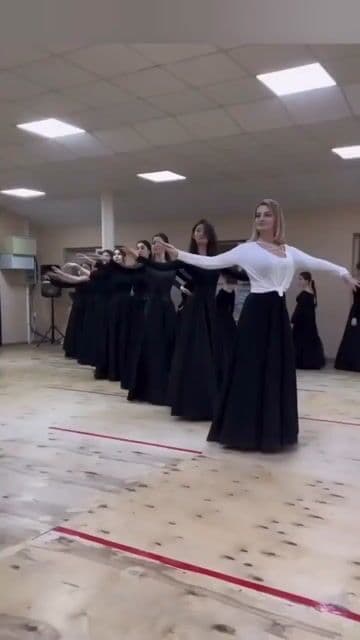
Circassian dance — "the famous Russian dance" is actually Circassian
Real. The dancers seem to glide across the floor without taking steps. That floating look is the signature of traditional Circassian women's dance, done with tiny steps hidden under floor-length skirts. It's a 75-second rehearsal in an ordinary studio: worn floorboards with red tape marks, New Year baubles hanging from the ceiling, a Christmas tree in the corner, and a mirror that reflects the room correctly. Dozens of faces stay consistent the whole time.
Dragon Blood trees in Socotra, Yemen
Real. Dragon's blood trees grow only on Socotra, an island off Yemen, and they really look like this. Look under the big canopy at the top: every branch splits into two, again and again. That's how this species actually grows, and it's the kind of rule AI usually gets wrong. The lichen-covered boulder and sunlit dry grass are ordinary, messy details.
Hummingbird in flight
Real bird, heavily processed photo. It's a male ruby-throated hummingbird and the anatomy is right: a straight black bill, a small white spot behind the eye, and a throat patch of overlapping scale-like feathers. The wing is motion-blurred because hummingbirds beat their wings around 50 times a second. The crunchy, over-sharpened feathers come from editing or AI upscaling, which is why it looks fake.